If your production team is coming to Italy from abroad, there’s one assumption that can quickly turn a smooth shoot into a legal and operational nightmare:
“We’ve flown this drone near airports before. We’ll just request permission in Italy too.”
As of 1 January 2026, that approach is no longer safe.
Across Europe (including Italy), the regulatory framework has fully shifted: in many cases, it’s not only about asking for authorization — it’s also about using the right class of drone and the right onboard safety systems.
If you show up with a consumer drone (even a very good one) and believe you can operate near airports, heliports, or airfields, you may end up unable to fly legally, exposed to sanctions, insurance issues, and serious liability. You have to use a “C5” class drone.
This article explains, in practical terms, what changed in 2026, why foreign crews are particularly at risk of misunderstanding it, and why operating in Italy often requires partnering with a structured local operator like Overfly.me .
Italy is a dense territory filled with:
– major international airports,
– regional and local airports,
– airfields (called “aviosuperfici” in Italian),
– heliports and helipads (“elisuperfici”),
– and airspace constraints tied to air traffic management.
Here is the catch: many of the most cinematic areas (Venice, for example) — historic centers, waterfronts, castles, rooftops, panoramic viewpoints — are often located surprisingly close to one of these aeronautical infrastructures.
That means a foreign crew arriving in Italy can unknowingly plan a shoot in a restricted UAS geographical zone simply because “the location looks like a city center, not an airport area”.
In 2026, that can be a costly mistake.
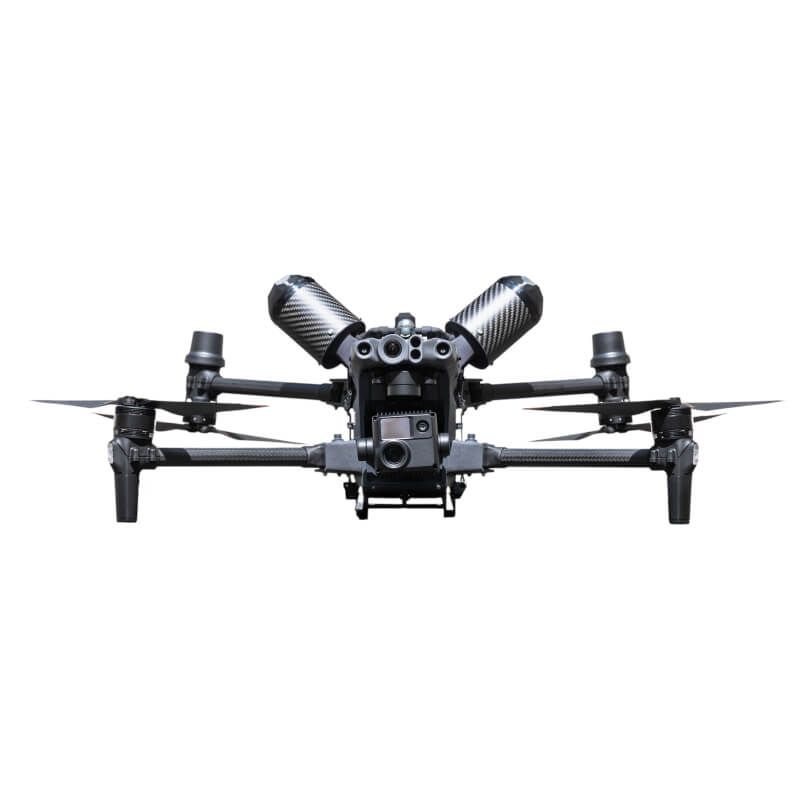
What changed on 1 January 2026 (the real shift)
From 2026, the European UAS framework is fully in force operationally, and national “workarounds” or old habits no longer protect you.
In simple terms:
Near airports / heliports / airfields, in many cases you may only be able to obtain authorization and operate legally if:
– your drone is compliant as Class C5 or Class C6 (depending on the operation/scenario), AND
– it is equipped with key safety systems such as a parachute and a flight termination system (FTS), AND
– the operator/pilot and the authorization process are correct and consistent.
It’s not a “bureaucratic update”. It’s a technical threshold.
In 2026, it’s often not enough to say: “We’ll ask for permission.”
Is your Pilot / Drone operator able to say: “We can meet the technical mitigations required to make this operation authorizable”?
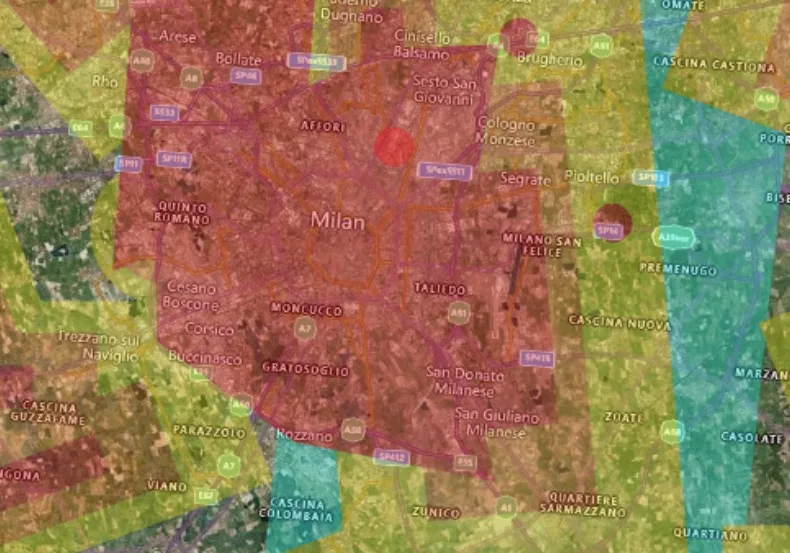
UAS Geographical Zones: the invisible constraint that blocks foreign crews
The EU framework defines UAS Geographical Zones: portions of airspace where drone operations are:
- prohibited, or
- limited, or
- allowed only under specific technical and operational conditions.
Italy implements these zones through its national system and procedures. The practical result for film crews is straightforward:
If your shooting location sits inside a UAS geographical zone related to an aerodrome/heliport environment, your operation is automatically treated as higher-risk and more complex.

This is why a crew can arrive with “all permits ready” for a location, but still be forced to cancel the drone portion of the work — because the drone and the operational setup do not meet the authorizable requirements of that zone.
The 2026 practical rule (fast mental checklist)
If the location is close to:
- an airport,
- a heliport/helipad,
- an airfield,
- or an area influenced by air traffic management constraints,
then you should assume:
1) Authorization will be required.
2) Authorization may only be granted if the drone is compliant with C5 or C6.
3) Parachute + Flight Termination System are often essential parts of the safety mitigations.
This is the moment where many foreign crews get stuck: they arrive with a high-end drone, but not a C5/C6-compliant platform configured for these scenarios.
What are C5 and C6 drones (and why they matter for authorizations)
C5 and C6 are not “marketing labels”. They are EU product classes designed for more demanding operations, especially in the “specific” category and standard scenarios where higher safety is required.
The key point is this:
In 2026, authorities and airspace stakeholders increasingly expect technical mitigations onboard the UAS — not just procedural promises.
C5/C6 compliance is one of the clearest ways to demonstrate that your aircraft is designed (or converted) to meet that safety level.
For many operational contexts near aerodromes, this becomes a central condition for making the operation authorizable.
If you are a foreign crew, you must not assume:
“My drone is top-tier, therefore it’s fine.”
Because “top-tier” is not the same as “C5/C6 compliant in 2026”.
Parachute: why it’s required (in real-world terms)
A parachute is a ground-risk mitigation tool.
If the drone suffers a critical failure and falls, the parachute reduces descent speed and impact energy, lowering the chance of severe damage to:
- people,
- vehicles,
- buildings,
- and sensitive infrastructures.
In environments influenced by airports/heliports (or near crowded historic areas), reducing potential ground impact becomes a major safety requirement.
Short version:
If something goes wrong, the parachute can drastically reduce ground risk — and that is exactly why it is often requested as a mitigation.
Flight Termination System (FTS): what it is and why it’s not optional anymore
The Flight Termination System is a “last barrier” safety feature.
It allows the remote pilot (or an independent safety function) to immediately stop the flight if continuing would be unsafe — for example due to:
- interference,
- loss of control,
- critical anomalies,
- or behavior that makes the aircraft unpredictable.
In a sensitive airspace context, the ability to end the flight immediately can be decisive in risk management.
Practical concept:
FTS exists for those situations where “trying to land normally” is not the safe option.
The common (and dangerous) mistake: “Let’s fly anyway”
Even in 2026 you will still hear someone say:
“We’ll fly anyway. Nothing will happen.”
For a foreign production, this is the fastest route to a serious problem.
Operating:
- without a compliant drone (C5/C6 where required),
- without the correct authorization,
- inside a restricted UAS geographical zone,
can expose the pilot, the operator, and the commissioning party to heavy consequences — even if the flight ends without an incident.
And if something does go wrong, non-compliance becomes an aggravating factor.
Real risks: administrative, civil, and criminal exposure
When crews underestimate drone compliance near aerodrome-influenced areas, the risks are not theoretical.
Administrative risks:
- significant fines and sanctions,
- suspension or restrictions for operators,
- aeronautical enforcement actions.
Civil risks:
- liability for damages to third parties,
- insurance complications or denial of coverage,
- recourse actions by insurers (even full recourse).
Criminal risks:
In case of an incident (even without victims), authorities may investigate:
- flight safety violations,
- personal liability for the remote pilot and responsible personnel,
- aggravated responsibility tied to non-compliance.
This is not alarmism. It is what happens when drone operations intersect with regulated airspace constraints and safety requirements.
What a compliant operation near Italian airports really requires
To operate legally in a constrained area, you typically need a complete, coherent setup:
1) A drone compliant as C5 or C6 (depending on the operation/scenario)
2) Parachute and FTS installed and declared correctly when required
3) Correct pilot and operator qualifications
4) A proper authorization process aligned with the zone and the ATM context
5) An operational plan consistent with risk mitigations and stakeholders’ requirements
Foreign crews often miss point #1 and #2, because in their home market the “permission” part was historically more central than the aircraft compliance.
In 2026 Europe, that balance has changed.
Why choosing the right local operator matters (especially for foreign productions)

For a production company, the consequence is direct:
Not every drone operator can work everywhere anymore.
If you rely on someone who:
- does not have C5/C6-capable platforms,
- minimizes the authorization process,
- tries to “find shortcuts”,
you are exposing your production to:
- shoot cancellation or delays,
- invalidation of captured material (because it was obtained unlawfully),
- legal exposure for your production company as commissioning party.
Overfly.me: making airport-adjacent operations possible in 2026
Overfly prepared for this shift before 2026 by investing in:

- fleets aligned with the new EU requirements,
- advanced onboard safety systems,
- strong authorization know-how and operational risk management.
What this means for your production:
- we can plan drone work in locations that are close to airports/heliports (where authorizable),
- we manage complex authorization workflows with the competent authorities,
- we reduce operational disruption and legal exposure,
- we protect your production continuity with compliant equipment and procedures.
In 2026, having a drone is not enough.
Compliance, safety, and structure are what keep productions running.
If your foreign crew is coming to Italy and expects to operate near historic centers, coastlines, landmarks, or dense urban areas, do the smart thing:
assume there is an aeronautical constraint nearby — and involve Overfly early, before your schedule is locked.
Practical takeaway for foreign crews (save this)
If you’re coming to Italy to film:
- don’t assume your drone is legally usable near airports/heliports,
- don’t assume “permission” solves everything,
- plan for C5/C6 compliance and safety mitigations from the start,
- partner with a local operator like Overfly.me, that already has compliant platforms and authorization expertise.
That is how you avoid sanctions, cancellations, and risk — and deliver your production on time.
Disclaimer
This article is informational and does not replace official guidance or a formal operational assessment. Each location and operation must be evaluated based on the applicable UAS geographical zone, authorization requirements, and the specific risk profile of the mission.